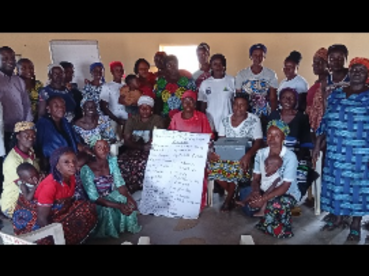
The Kungte community of Fan District in Barkin Ladi LGA, of Plateau State, Nigeria has faced challenges due to conflicts and crises for many years.
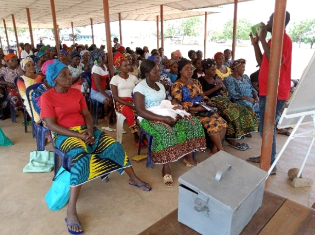
The Household Economic Strengthening (HES) unit is one of the many units in the organization.
The unit is responsible for carrying out various activities designed to ensure the success of the
livelihood component under various projects.
The HES unit is saddled with the responsibility of . . .
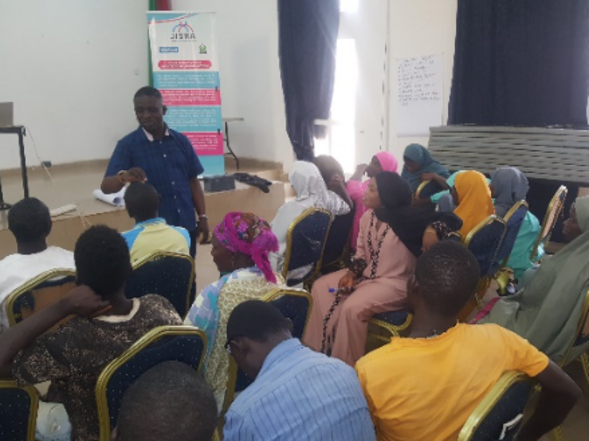
This project is designed towards reducing Gender Based Violence (GBV) and
increasing peaceful coexistence.
Strategies include advocacy to key stakeholders: Ministry
of Women Affairs and Social Development
Target Locations
Title of Project: Improve socio-economic empowerment, peacebuilding and political participation of
women and girls in Ogoja, Cross River States.
Project Duration: April 2022 to April 2024
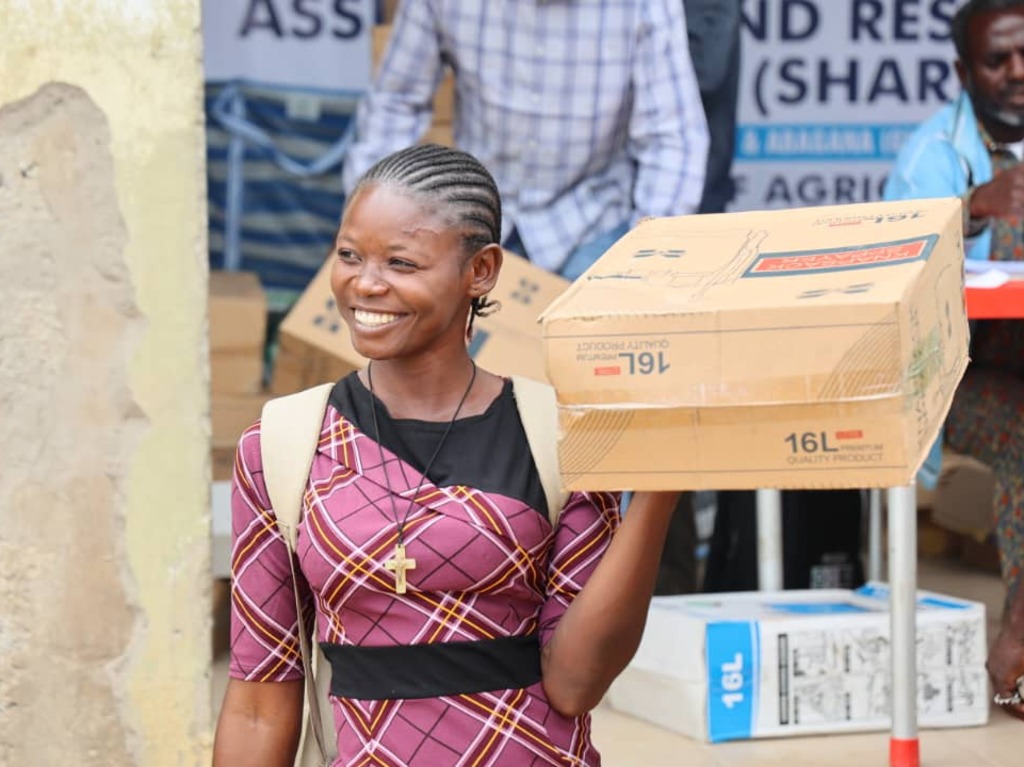
SHARP aimed to strengthen livelihoods through climate-smart agriculture, build resilience, promote hygiene, and foster peace in Benue State (Abagena and Ichwa IDP Camps). Key activities included stakeholder engagement, community entry, transforming masculinities training, trauma healing sessions, self-help group formation (VSLAs),
The Spotlight Initiative project under the UN Women Trust Fund was implemented to combat sexual and gender-based violence (SGBV) and empower women and girls. The project aimed to end violence against women and improve health, safety, well-being, and dignity. Strategies employed included community engagement, capacity building, advocacy, and service provision. Trained gender champions facilitated dialogue sessions, while action committees responded to real-time SGBV cases in collaboration with faith leaders, community heads, service providers, and security agencies. Key outcomes included increased awareness, improved survivor response, cultural shifts, sustainability through community ownership, and collaboration among genders.
The Kungte community of Fan District in Barkin Ladi LGA, of Plateau State, Nigeria has faced challenges due to conflicts and crises for many years. These conflicts stem from a mix of factors including ethnicity, religion and competition for resources causing negative impacts on women and girls who often bear the brunt of the unrest. The repeated episodes of violence have disrupted routines resulting in families being displaced, properties being destroyed and community structures breaking down. This has widened the gap leaving women and girls without the skills needed to fully engage in society and the economy. On a level, local businesses and livelihoods have been severely affected by the conflicts. Women who are active in small scale trade and agriculture have lost their sources of income and earnings. This economic decline has pushed families into poverty with households led by women facing vulnerability. Additionally, the environmental consequences of these conflicts have been significant. This impacts not
only the health and welfare of the community but also adds pressure on economic resources, especially in agriculture and water management. Women are frequently excluded from decision making, having restricted access to resources and opportunities
and encounter chances of gender-based violence. This project aims to address these interconnected challenges by providing integrated economic empowerment, and environmental stewardship leading to a peaceful community. By focusing on these
areas, the project seeks to break the cycle of marginalization and empower women to become active agents of positive change in their community, contributing to long-term peace and sustainable development in Kungte community.
This project is a nine (9) months project with focus on two major objectives;
1: To increase social cohesion by 20% among 100 women and men in Kungte
community members by October 2025.
2: To empower 50 women economically through formation of two (2) Village Savings
and Loan Associations (VSLA), and skill development in sustainable agriculture by 20%
in Kungte community by October 2025.
The proposed project in Fan District, Kungte community of Barki Ladi, LGA of Plateau State, sponsored by Bread for the World through Development Exchange Centre (DEC) and implemented by SUWA, will address critical needs that have been severely
exacerbated by ongoing conflicts. Supporting this initiative is crucial for several compelling reasons:
1. Breaking the Cycle of Marginalization: By focusing on economic empowerment, and environmental stewardship, the project offers a comprehensive approach to uplift women who have been disproportionately affected by the crises. This holistic strategy can help break the cycle of poverty and exclusion.
2. Promoting Sustainable Peace: Empowering women economically can contribute significantly to community stability and resilience, reducing vulnerability to future conflicts.
3. Environmental Restoration: Addressing environmental degradation is vital for the community's long-term health and economic sustainability, particularly in agriculture-dependent areas.
4. Inclusive Development: The project's focus on women with disabilities, widows, and marginalized groups ensures that the most vulnerable community members are not left behind in the development process.
5. Community Resilience: Strengthening women's roles in the community can lead to more robust social networks and support systems, crucial for navigating future challenges.
The BLOOM project represents an investment in the Kungte community's future, promoting gender equality, economic growth, and environmental sustainability in a conflict-affected area that urgently needs intervention. Indeed, supporting women’
education can strengthen climate strategies by empowering women rights, fostering women’s climate leadership and pro-environmental decision-making. Bread for the World through Development Exchange Centre (DEC) has given resources for this
intervention for the people of Kungte Community to break every limitation to having sustainable peace, economic growth, social cohesion and a sustainable environment.
SUWA is also giving the time and resources needed to implement the project and to see to the achievement of the set objectives of the project, to ensure that the people ofKungte Community live in peace and are empowered to live out their full potentials, so
that they can contribute meaningfully to the growth and development of their community and the nation at large.
The Household Economic Strengthening (HES) unit is one of the many units in the organization. The unit is responsible for carrying out various activities designed to ensure the success of the livelihood component under various projects.
The HES unit is saddled with the responsibility of providing livelihood support for individuals, families, and communities through capacity building trainings such as Financial Education, VSLA methodology, and Income Generating Activities (IGA), and smart agriculture.
AS AT APRIL, 2025
S/N | PROJECT | NO. OF TRAININGS CONDUCTED | NO. OF GROUPS FORMED | NO. OF PEOPLE REACHED | LOCATION |
| 1. | PEACE BUILDING | 21 | 40 | M139 F995 | Plateau |
| 2. | UNTF | 27 | 64 | M28 F1,987 | Kaduna & Benue |
| 3. | WPHF | 11 | 34 | F 703 | Taraba, Cross River |
| 4. | FRIEND OF THE MINISTRY | 12 | 56 | M 312 F 1002 | Plateau, Benue, Kaduna |
| 5. | JISRA | 7 | 25 | M228 F268 | Plateau, Kaduna |
| 6. | SHARP | 3 | 10 | M87 F123 | Benue |
The HES unit has Conducted 81 VSLA Training, formed over 220 Savings/Self Help Groups,
reaching 5,872 persons.
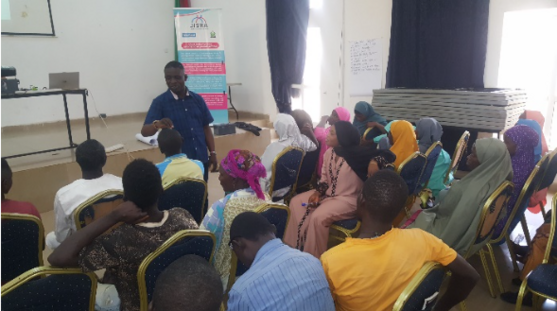
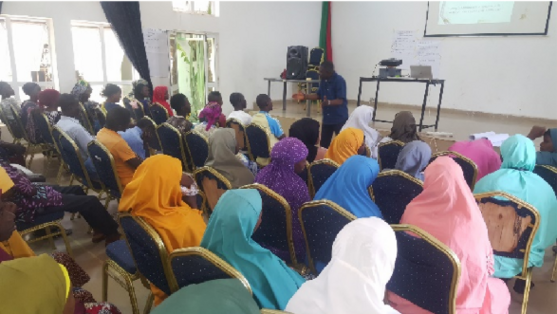
JISRA VSLA Training in Manchok, Kaduna state
Conducted 22 Financial Literacy Trainings to build capacity of individuals on income &
expenditure, financial planning, investment, and business planning, with 2,744 people reached.
| # | PROJECT | NO. OF TRAININGS CONDUCTED | NO. OF PEOPLE REACHED | LOCATION |
|---|---|---|---|---|
1 | UNTF | 1 | M 8 F 13 | Kaduna & Benue |
2 | WPHF | 5 | F703 | Taraba and Cross River |
3 | FRIENDS OF THE MINISTRY | 6 | M 312 F 1002 | Plateau, Kaduna, and Benue |
4 | JISRA | 7 | M 228 F 268 | Plateau, Kaduna |
5 | SHARP | 3 | M 87 F 123 | Benue |
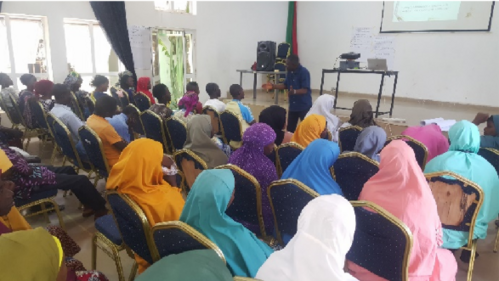
VSLA Training in Wanune, Benue State
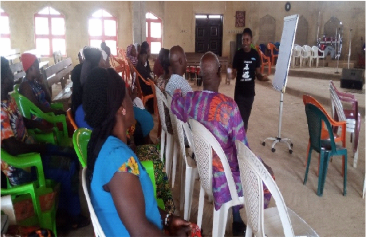
VSLA Training at Maraban Foron State, Plateau
| # | PROJECT | LOCATION | NO. OF SHARE-OUT | AMOUNT SHARED |
|---|---|---|---|---|
1 | PEACE BUILDING | PLATEAU | 25 | N25 626 899 |
2 | UNTF | BENUE & KADUNA | 26 | N24 080 908 |
3 | FRIENDS OF THE MINISTRY | PLATEAU & BENUE | 27 | N16 306 930 |
4 | WPHF | PLATEAU & BENUE | 26 | N9 652 360 |
5 | JISRA | TARABA & CROSS RIVER | 13 | N6 099 435 |
TOTAL | N81 766 532 |
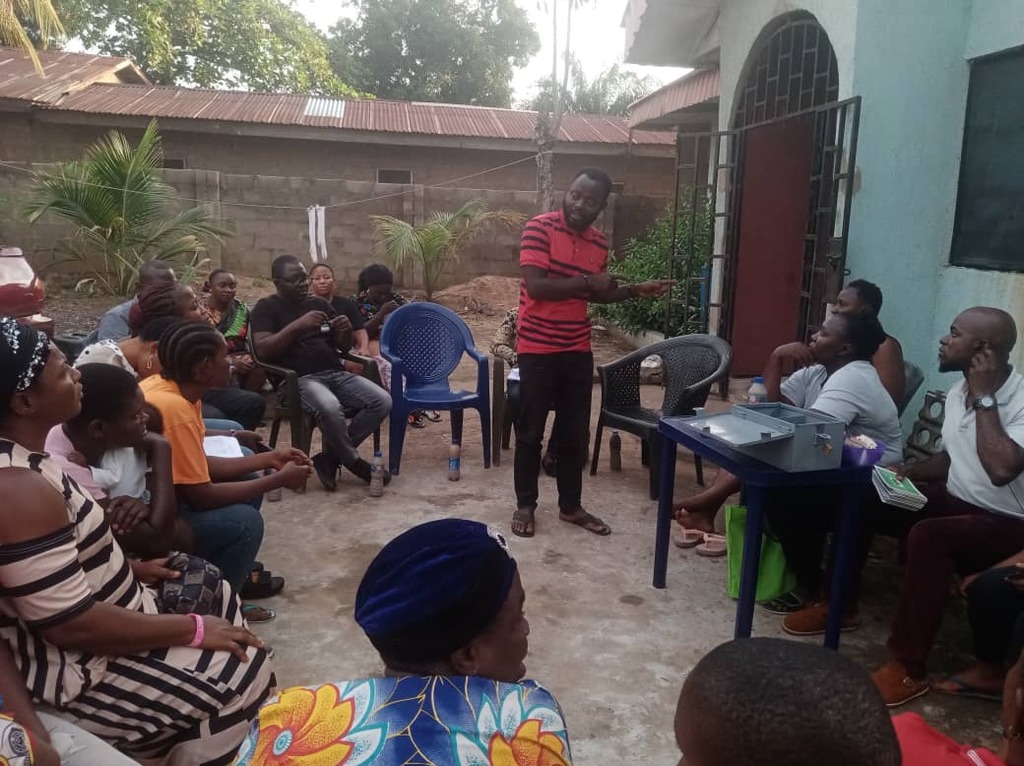
As a result of the interactive sessions with Management Committee of VSLAs in Plateau State,
the following have been achieved:
forum
LEADER GROUP, VSLA EXCOS, VSLA UK /COMMUNITY, JOS.
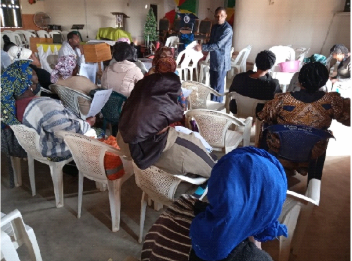
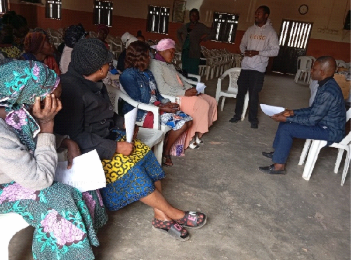
Photograph showing members of Management Committee of Savings Group in Nabor Gwong, during
the interactive session.
This project is designed towards reducing Sexual Gender Based Violence (SGBV) and increasing peaceful coexistence. The project aims at changing attitudes, beliefs and behavior on SGBV including different forms of violent conflicts found within the community of implementation. Strategies include advocacy to key stakeholders: Ministry of Women Affairs and Social Development (MWASD), Federation of International Female Lawyers (FIDA), Parents Teachers Associations (PTAs), School Authorities,
Traditional/ Religious leaders) etc to address harmful cultural practices against women/girls; work with service providers (health, social, legal, police) to be better able to identify and refer SGBV survivors to appropriate services, support and care. Sixty (60)
Gender Champions/ Peace Ambassadors have been trained to conduct community
dialogue sessions on SGBV and conflict Management. There is quarterly community dialogues to analyze roots causes of violence and how to mitigate them. Interventions to reduce the risk of GBV, designing initiatives to promote community resilience to GBV and violent conflicts enable survivors and those at risk to access care and support services. Local supporting capacities are being supported to establish systems to prevent and deal with SGBV in a sustainable manner. Faith/ traditional leaders, community
members, security personnel and other social service providers need are engaged and mobilized to actively speak out against GBV and violent conflicts. Beneficiaries of the project are SGBV survivors of violent conflicts including other community members
within the community. The project has created avenues that foster dialogue between victims and offenders resulting in victims’ satisfaction and offenders becoming accountable. setting up of interfaith committees, raise peace ambassadors, counseling,
and run for effective integration.
The project is built on three strategies
Project Location: This project is implemented in Angwan Rukuba, Tudun Wada Communities of Jos North, Gada, Naynago Communities of Jos South, Foron, Gashish communities of Barkin-ladi LGAs of Plateau State and Wanunne Benue state.
Objectives :
consultative, and prayerful support to effective faith-based initiatives that
emphasize evangelism, church planting, discipleship, leadership development and
redemptive ministries
SGBV and supporting livelihood empowerment, psychosocial support in their
communities
Project Outcome so far
members. The community dialogue session is encouraging forgiveness and reconciliation
among members of the community and encouraging Alternative Dispute Resolution
(ADR) and saving cost of litigation.
faith and divided Communities are beginning to communicate with each other and doing
things in common.
community members enhanced cooperation and social cohesion among target group and
community members hence, encouraged project ownership.
smooth implementation of the project and acceptability of the project/organization. The
involvement of women and youth in peacebuilding enhance good participation and equal
right for all.
clear understanding of peace building and conflict management.
religious authorities) gives opportunity to access participation and ownership of the
project by the people.
/volunteers helped them to be effective in respective community work.
were prone to violence into a peaceful community. Young people under the facade of
religion are denouncing violence and seeking ways to work for peace and engage in
meaningful ventures. Hence, reducing intra communal conflicts
WhatsApp, GSM calls, SMS, and internet has enhanced the success of our work. There is
reduced delay of upward and downward flow of information with increased proper
channeling and prompt action.
Target Locations
Manchok/Zankan, Morda).
Russia).
The Joint Initiative for Strategic Religious Action (JISRA) in Nigeria is a consortium of four international
NGOs—Mensen met een Missie, Tearfund, Search for Common Ground and Faith to Action
Network—alongside seven local implementing partners: Dialogue, Reconciliation and Peace (DREP)
Centre, Development Initiative of West Africa (DIWA), Federation of Muslim Women’s Associations in
Nigeria (FOMWAN), RURCON, Scripture Union West Africa (SUWA) and Women Interfaith Council
(WIC).
The JISRA program seeks to transform intra-, inter-, and extra-religious dynamics in Nigeria to promote
Freedom of Religion and Belief (FoRB). Through an interconnected approach, the program aims to
reduce FoRB-related conflicts and foster peaceful coexistence in ten Local Government Areas (LGAs)
across Kaduna and Plateau states. JISRA leverages the influence of religious leaders, youth, women, and
civil society from diverse religious and ethnic backgrounds to identify, reflect on, and act upon key entry
points for dialogue and engagement. By doing so, the program fosters an inclusive, tolerant, and
harmonious society. JISRA partners focus on empowering religious and community leaders, youth, and
women to bridge religious divides and advocate for a more inclusive social and policy environment.
The program operates on the following Theory of Change (ToC):
equipped with skills in dialogue, conflict management, mediation, and FoRB advocacy,
cooperation at the community level.
shared grievances—interfaith trust, mutual respect, and collaboration will strengthen.
The JISRA program envisions a sustainable transformation where:
discouraged.
attacks, is broken.
Recognizing the deep-rooted religious dimensions of violence in Nigeria, JISRA addresses both human
rights violations and peacebuilding gaps. By tackling these interconnected challenges, the program aims
to foster a more inclusive, peaceful, and cohesive society.
Processes of FoRB in Conflict and Peacebuilding:
Religious freedom is a critical enabler of peace. Conversely, the lack of religious freedom is a
demonstrable cause of conflict. Religious freedom, incorporated into SUWA JISRA efforts to promote
communal and state peaceful coexistence, the settlement of conflict, the reduction of religious intolerance
and other goals related to peacebuilding.
The processes of FoRB in conflict and peacebuilding may include;
1. Risk Assessment and Conflict sensitivity: Doing a thorough job on risk assessment and
conflict sensitivity at the planning stage helped us to manage the risk and reduce
conflict. The fact risk exists helped us to think of possible hindrances to successful
projects implementation. Risk assessment helped SUWA to make possible adjustments
for quality service delivery. Most often, some risks are far beyond our control and having
this in mind helped us to plan in anticipation (ahead). Through community and
stakeholders’ engagement and involvement that provided opportunity to carry out conflict
mapping, conflict analysis, risk management and possible mitigation measures, we also
ensured that the principle of “Do No Harm” is upheld. This is done periodically and
documents are upgraded.
2. Advocacy and awareness raising: 17 key stakeholders were trained in collaboration with
JISRA Lobby Advocacy and Communication Group (LACWG) on advocacy, social
accountability, election; women and youth participation from the project sites to
champion advocacy issues, community sensitization and awareness creation on civic
education and non-violence election participation. Further step down was done for other
community members. These trainings have helped in all our communities of JISRA
project implementation sites to have had a peaceful election in the 2023 presidential,
national assembly, governorship and state assemblies’ election.
3. Capacity building: SUWA through the Intra Religious Pillar have trained 96 stakeholders
(traditional, religious, women and youth leaders) from the project sites on sanctity of life,
forgiveness for all, civic responsibilities and religion, love for neighbour and peaceful
coexistence, justice and peace, harmful cultural practices, impartiality and non-
discriminatory behaviour. 120 faith actors trained under interreligious pillar from the
project sites on discrimination, tenets of Christian and Islamic beliefs, framework of
interreligious dialogue and peaceful coexistence. Due to the effectiveness of the
trainings, over1000 indirect have been reached through step down trainings and
awareness raising
4. Dialogue: Dialogue is a powerful tool that help in building trust and good relationship
among community members. The dialogue is at intra, intra, extra and cross cutting
pillars. It helps to reduce and remove prejudice and fear and can be vital in addressing
sensitive issues related to religious freedom such as conversion, apostasy, and
blasphemy. SUWA has facilitated 39 intrareligious dialogue sessions with the
stakeholders. This has brought about change in attitudes, behaviour and perception thus
leading to forgiveness, reconciliation, love, respect for one another, peaceful
coexistence, tolerance and appreciation of their common values and differences. 6 Inter-
religious dialogue sessions were conducted within the 4 LGAs of Plateau and Kaduna
States (Jos North, Bassa, Kaura, Jama’a).
5. Mediation: through the various dialogues initiated at the community level, SUWA was
able to facilitate a mediation process between the farmers and herders.
6. Setting up of network/structures: SUWA through the JISRA project implementation have
set up 39 peer horizontal intrareligious networks and 6 Peer Horizontal interreligious
networks formed across Plateau and Kaduna States involving Religious, traditional
leaders, Women and Youth leaders at the community level 6 interreligious networks
formed across Plateau and Kaduna States involving religious, traditional leaders, women
and youth leaders thus bringing about inclusivity for all irrespective of religion, gender,
ethnicity, colour etc.
7. Collaboration and partnership: SUWA partner with other service providers at the
community, Local, State, National levels.
With the coming of JISRA project, there is now increased understanding on sanctity of human
life, God’s creation, love for neighbor, peace and unity, tenets of Christians and Muslim
principles/practices.
This has brought about religious tolerance, relationship building, mutual understanding, respect,
unity and peaceful coexistence between the two community as they now do things together
without any discrimination. They attend each other’s events at their religious worship centers.
The interreligious dialogue for the communities is held in both the Churches and Mosques
thereby bridging religious divides and creating room for networking along networks of youth,
women, traditional/ faith actors.
Description of project:
Title of Project: Improve socio-economic empowerment, peacebuilding and political participation of
women and girls in Ogoja, Cross River States.
Project Duration: April 2022 to April 2024
1. The objectives are:
To increase women/girls’ participation in politics and decision making processes in Ogoja, Cross
River State;
2. To strengthen capacity of women/girls and host communities for increase peace, recovery and
resilience in the refugee camp and host community;
3. To increase socio-economic status and financial literacy of displaced women and girls in Ogoja,
Cross River State.
# | Key Achievements | Outcomes |
1. | Conducted capacity building for 524 women/girls on political participation, leadership skills, human right, the constitution, gender equality, gender mainstreaming, democracy in attendance in Taraba (Ibi, Manya, Wukari and Nyivu), and Cross River (Ogoja). | There is positive shift in social perception and narrative as more women/girls voted in the last election compared to the 2019 election. A women’s group in Taraba supported Mercy Dauda (a beneficiary) in her political aspiration. The group bought the interest form as well as the nomination form for the position of councilor. Though she was asked to step down at the primaries she was nominated for the position of Special Adviser to the Executive Chairman of Ibi LGC. This has spurred the confidence of the women and girls participation in decision-making. |
2. | Conducted series of meetings with local government authority and displaced women’s and girls’ access to targeting 100 participants in order to support and have access to local government and power structures democracy in attendance in Taraba (Ibi, Manya, Wukari and Nyivu), and Cross River (Ogoja). | Built a bridge between refugees/host communities with the local government authority. Improved capacity to communicate and promote advocacy messages of the target communities involved with advocacy and policy work. The refugees and host community as a result of meeting with local government authority were able to voice out some of their challenges and be heard. It has opened up possibility for further interaction with the duty holders on the plight of the displaced. |
3. | Carried out refugee and host community rally/road walk in Taraba (Ibi, Manya, Wukari and Nyivu), and Cross River (Ogoja). | Stronger bond formed among the women. Women are more determined to talk about political participation with other women. The determination and participation of women encouraged other women to be part of the activity. Participants encouraged other women to be economically empowered if they want their voices to be heard in their homes and in the communities. |
4. | Conducted 2-day training on trauma healing (journey of healing) for 524 women/girls and 11 men in Taraba (Ibi, Manya, Wukari and Nyivu), and Cross River (Ogoja). | For many of the beneficiaries, the act of listening to others’ experience helps them to begin to overcome feelings of isolation and generate a local support network to help them process their trauma. These beneficiaries, despite their trauma, have developed resilience to the impacts of conflict and have built their life skills, developing confidence, self-worth and self-esteem. Christy Nuhu said that participating in the trauma healing sessions helped free her from trauma, and she is a firm believer that it could be the same for others. |
5. | Conducted dialogue sessions for 1002 (women/girls: 798 and men/boys: 204) participants on peace mediation, peaceful co-existence and reconciliation between farmers and herders with traditional leaders, religious leaders, youth, women and representatives of government in attendance in Taraba (Ibi, Manya, Wukari andNyivu), and Cross River (Ogoja). | The dialogue provided a genuine effort to bridge communication gaps and promoted understanding towards peaceful co-existence in a diverse society. The stakeholders agreed to form an inclusive local community peace and security architecture which has helped in the early detection and resolution of potential conflicts. This has bridged the mistrust between farmers and herders through the active involvement of representative community groups. For instance, local vigilante groups are working closely with the herders and farmers. |
6. | Established 7 peace clubs targeting 192 women/girls and 151 men/boys in Ogoja. The peace clubs are managed and run by the peace ambassadors respectively. Established 8 peace clubs targeting 214 women/girls and 242 men/boys in Ogoja. The peace clubs are managed and run by the peace ambassadors respectively. | This has reduced tensions in the community with increase friendliness. Since the peace clubs were established, there have been positive changes observed in the behavior of the children who are participating in the peace club activities. It is fostering peaceful and harmonious living in the communities. Social cohesion/ integration: There’s been social cohesion between the men and women, Christian and Muslim communities, and increased joint activities; at the point of decision making, men and women are brought together. Acceptance of each other’s views and values both in inter and intra religious level.participant, Esther Emmanuel, stated that in the peace clubs, they had learnt the importance of co-existing with each other whether Christians or Muslims, avoiding generational conflicts, and respecting cultural diversity. |
8. | Formation and mentoring of 30 village savings and loans associations (VSLAs) in Taraba (Ibi, Manya, Wukari and Nyivu), and Cross River (Ogoja). 682 women/girls were trained on VSLA approach. | Empowerment of women and active participation, peaceful coexistence in the community: women generally have always depended on men for their sustenance and that had increased the level of domestic violence. Women who are in VSLA groups have increased income due to divers’ business ventures; they are accessing loan without the normal banking constraint, they are less dependent, and are able to take care of their children and family. |
9. | Conducted training on financial literacy for 577 (PWD: 11) beneficiaries in Taraba (Ibi, Manya, Wukari and Nyivu), and Cross River (Ogoja). | The women and girls were equipped with knowledge on issues relating to finance, which include creating a balance between income and expenditure. Some of the women have been creative in establishing new businesses while others see their businesses thriving. There is increased confidence in women running their businesses, become assertive positively instead of being passive in family and community decisions. |
10. | Grant of ₦5,200,000 was disbursed to 26 VSLA groups to be used as revolving loan as part of sustainability plan in Taraba (Ibi, Manya, Wukari and Nyivu), and Cross River (Ogoja). | VSLA members were empowered through increased access and control over resources leading to use of collective power to overcome social and financial barriers. It has strengthened the local structure as a means of ensuring sustainability. |
11. | Conducted training 603 participants (women/girls: 472; men/boys: 131) in sustainable and innovative agriculture (climate smart agriculture) including food processing and preservation in Taraba (Ibi, Manya, Wukari and Nyivu), and Cross River (Ogoja). | Climate smart agriculture seeks to stabilize crop production while mitigating the adverse effects of climate change besides maximizing food security. 80- 90% of the women are farmers, who were taught on how to produce organic fertilizer which they will use and also sell thereby increasing their income. The women have come to discover that wastes that they throw away are useful and valuable. They women have better understanding of zero waste in agriculture. |
12. | Conducted community infant and young child feeding (C-IYCF) for 512 women/girls (PWD: 9) on expanded nutritional intervention package in project location in Ogoja, Cross River State which was targeted in providing relevant information on the new development in food and nutrition packages. | The participants accepted infant and young child practices so as to achieve optimal growth, development and health of the infant and young child. Vitamin A supplementation helps in eliminating a lot of future opportunistic viral infection. The women are able to prepare better feeding and this has improved the wellbeing of the infant and young child thereby taking the lead in ensuring that their children grow and thrive by getting a nutritious diet. |
13. | Conducted training in nutritional cheap available food for women within the location. SUWA identified and produced copies of the nutritional values of locally indigenous food for improved health for 505 (PWD: 9) women/girls in Taraba (Ibi, Manya, Wukari and Nyivu), and Cross River (Ogoja). | Participants are able to identify affordable nutritional foods in the market and use to improve health outcomes for children and family. Trained participants engaged other women in community to adopt same approach, thus improving the overall health outcomes of the community. Training participants formed women-to-women support groups and provide mentorship on dieting and nutrition education in the community. |
14. | Funded vocational training (tailoring) and start-up kit given to 10 beneficiaries in Ogoja, Cross River. | The 10 budding fashion entrepreneurs are equipped with sewing machine aimed at propelling the beneficiaries toward economic self-sufficiency. This has stimulated economic empowerment. Importantly, SUWA encouraged them not to divest the provided kits but to deploy them, not only for personal growth but to empower others, thereby contributing to job creation. |
SHARP aimed to strengthen livelihoods through climate-smart agriculture, build resilience, promote hygiene, and foster peace in Benue State (Abagena and Ichwa IDP Camps). Key activities included stakeholder engagement, community entry, transforming masculinities training, trauma healing sessions, self-help group formation (VSLAs), peace club formation, and distribution of hygiene kits and seedlings. Over 400 beneficiaries were registered, with validated processes ensuring accountability. The project fostered improved community dialogue, social cohesion, and gender inclusion. Community dialogue graduation events symbolized healing and reconciliation, including emotionally significant gestures between men and women.
